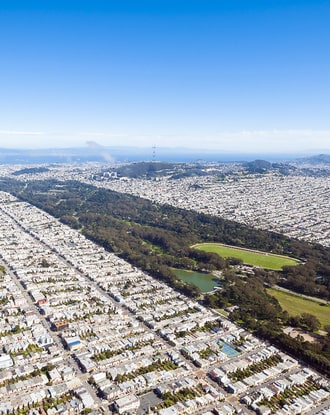
Golden Gate Park spans 1,017 acres and is filled with various gardens, playgrounds, lakes, picnic groves, trails, and monuments. It’s also home to an array of cultural venues that host regular events and community activities. The park welcomes more than 13 million visitors every year. When visiting Golden Gate Park, the best place to start is McLaren Lodge. This is where you can grab a map and find out about the events happening in the park that day. Picking and choosing what to see in the park can be difficult. What started as a vast windswept expanse of sand dunes has been carefully manicured into a verdant, horticulturally diverse, and picturesque public space. Park engineer William Hammond hall and master gardener John McLaren sculpted Golden Gate Park into a beautiful space for city dwellers to escape their fast-paced lives and reconnect with the natural world.
City Page Type: Destination
-
Golden Gate Park
-
Golden Gate Bridge
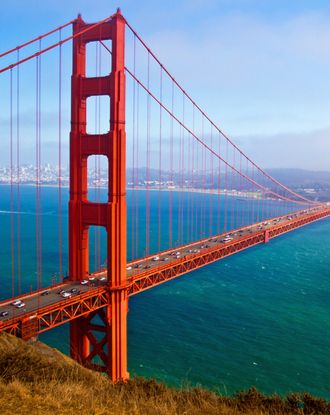
This 4,200-foot suspension bridge was the longest in America when it was first opened in 1937, and it held that title for nearly three decades. Named after the Golden Gate Strait, which acts as the entrance to the San Francisco Bay from the Pacific Ocean, the Golden Gate Bridge’s iconic status as a San Francisco landmark has garnered a lot of urban legends and speculations ever since it was first built. For example, some wonder how often it needs to be painted to maintain its red color. The answer? Every day the bridge receives maintenance, painting included. Suspended by two enormous main cables, they contain 80,000 miles of material inside of them, enough material to circle the Earth more than three times. Each of the two towers of the Golden Gate Bridge stand at 742 feet over the sea level. An amazing feat of ingenuity and construction for its time, it originally cost $35 million to build in the 1930s—that translates to $1.2 billion today.
-
Fisherman’s Wharf
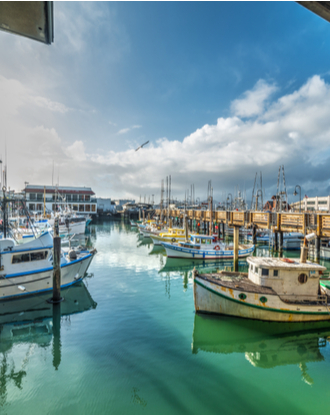
Times have certainly changed since the city’s early days, but visitors can still see fishermen at work at Fisherman’s Wharf everyday. In addition to being home to the city’s fishing fleet, the wharf is also the major launching point for Bay cruises and charters. Fisherman’s Wharf is an ideal location for family entertainment. Take in the famous sea lions basking during the day, visit Ripley’s Believe it or Not! Museum, or view aquatic wildlife at the Aquarium of the Bay at PIER 39. Step back in time with tours of the S.S. Jeremiah and the World War II submarine, as well as the U.S.S. Pampanito. Visitors to Fisherman’s Wharf can also enjoy ample opportunities for shopping and dining. The shopping complexes at PIER 39 and Anchorage Square offer a wide variety of specialty shops and restaurants. The old Ghirardelli Square is now a bustling open air market where visitors can experience the Ghirardelli company’s original chocolate-making machines.
-
Coit Tower
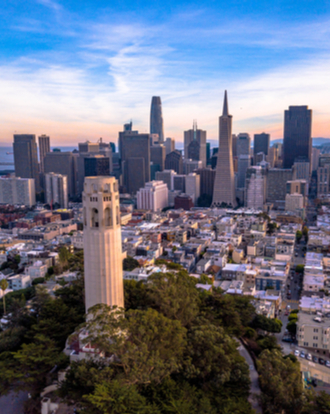
The simple yet iconic tower in northern San Francisco is named after Lillie Hitchcock Coit, a wealthy eccentric patron of the city’s firefighters. When she passed away in 1929, she left a substantial amount of money “for the purpose of adding to the beauty of the city I have always loved.” The funds were used to build a monument to her beloved volunteer firefighters and the Coit Tower. The Coit Tower was designed by Arthur Brown Jr.’s firm. Many people think the tower was designed to resemble a fire hose nozzle, however this rumor is not true. Inside the tower, you’ll find murals painted in 1934 by a group of artists from the Public Works of Art Project. They depict life in San Francisco during the Great Depression. In that same year, violence broke out over some controversial elements of the paintings. Despite the radical content, the frescoes opened to the public in the same year.
-
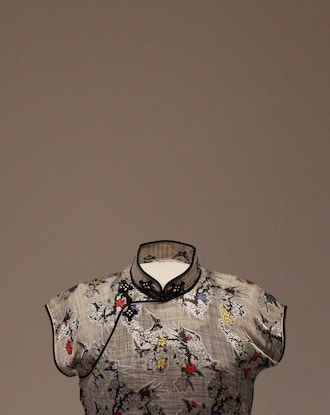
Asian Art Museum
San Francisco’s Asian Art Museum was originally opened in 1966 as a wing in Golden Gate Park’s de Young Museum. The first art pieces displayed in the museum’s gallery were donated by noted Chicago industrialist Avery Brundage, who first pledged his donation as early as 1959. Brundage’s pledge challenged the city to raise the funds to create the Asian Art Museum. The Asian Art Museum remained in Golden Gate Park for 35 years. During this time, Brundage continued to collect until his death in 1975. He bequeathed his collection to the museum, which by then had grown into an independent entity with its own governing body, staff, library, budget, and departments dedicated to both photography and art conservation. In 1994, San Francisco voters overwhelmingly approved a measure to renovate the old Main Library across from City Hall and move the Asian Art Museum to that location. It took several years of planning, designing, and construction, but the museum finally opened the doors to its new location in March of 2003. Some of the museum’s most incredible exhibits include art pieces that are more than 6,000 years old. Visitors can enjoy a variety of events and programming options, including the Village Artist Corner on the first Sunday of every month.
-
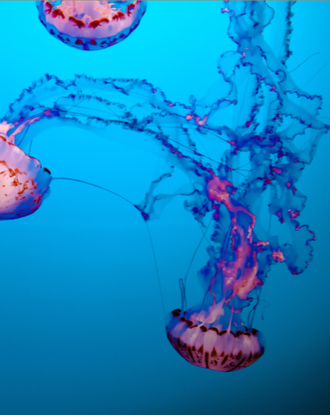
Aquarium of the Bay
Aquarium of the Bay at PIER 39 is dedicated to enabling conversations on climate resilience and ocean conservation globally. They also hope to inspire local actionable change through the protection and preservation of the San Francisco Bay ecosystems. The aquarium houses more than 20,000 marine animals including rays, sharks, octopus, jellyfish, anchovies, otters and more. They are located in the historic San Francisco waterfront at PIER 39. For visitors who want an up-close and personal experience with marine life, they have Touch The Bay exhibit. This gallery gives visitors the opportunity to touch animals such as sharks, anemones, rays, sea stars, and sea cucumbers. Inside the Bay Lab, you’ll also find land dwelling animals such as chinchillas, tortoises, frogs, and more. These exhibits also explain to visitors how associated habitats have been impacted by global climate change.
-
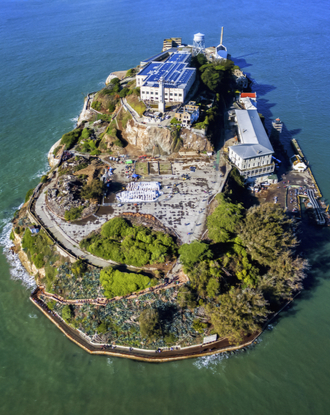
Alcatraz Island
The history of San Francisco’s Alcatraz Island is truly fascinating. The island, affectionately known as “The Rock” has been a Civil War fortress, a bird sanctuary, an infamous federal prison, home to the first lighthouse on the West Coast, and the birthplace of the Native American Red Power movement. For its significance to our nation’s history, the island is now a National Historic Landmark. During your visit you can learn about some of the ongoing historical preservation projects taking place on the island. Alcatraz Island offers visitors a variety of experiences. You can learn about the nesting, mating, and behaviors of colonial nesting seabirds, birds whose ancestors have been visiting the island long before humans first discovered it. Visitors can embark on a guided audio tour of the Alcatraz Cellhouse and listen to some of the fascinating stories from the island’s penitentiary era. Or, you can study the role that the fort at Alcatraz Island played in the Civil War and learn how troops first came to be stationed on the island in 1859.
-
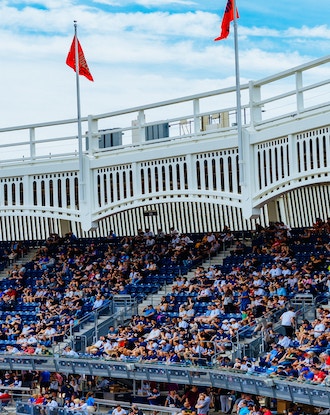
Yankee Stadium
From 1923 to 2008, Yankee Stadium was across the street from their current ballpark. That first home was known as the “House that Ruth Built,” because Babe Ruth has been largely credited with drumming up the funding for the stadium’s construction. After Derek Jeter’s tear-jerking goodbye speech to the original stadium, the Yankees moved to a brand new fully-equipped facility across the street. Their new home is a mix of architecture inspired by the old stadium’s distinct look and fresh ideas that give Yankee fans a 21st century level of comfort. It now seats 52 000 people, offers unobstructed sight lines, and boasts several clubs and lounges for private events. Stylish conference rooms and luxury suites are available to rent for corporate outings, off-site meetings, and networking events. Yankee Stadium has become more than a ballpark. It’s now a place to see and be seen.
-
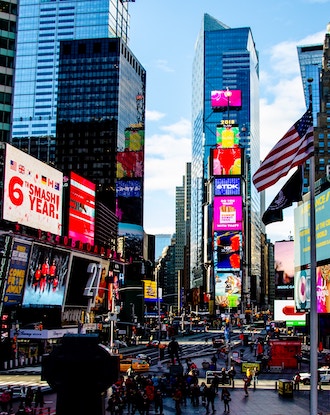
Times Square
Once known as a dangerous red light district, Times Square has changed a lot! This junction of Seventh Avenue and Broadway, where dive bars and peep shows used to reign, was first dubbed Times Square in 1904. Albert Ochs, publisher of the New York Times, moved the NYT offices to a skyscraper on what was then called Longacre Square. The Times headquarters used the building for less than 10 years, but the name stuck. Today, Times Square is a pedestrian wonderland. The big screens feature ads most of the time, but during Midnight Moments artists from around the world are invited to share their digital artwork. If you’re there during the day, take a picture with the costumed characters, visit the TKTS booth for discount Broadway tickets, stand in awe of One Times Square (where the New Year’s Eve ball drops), or take a tour of the Square’s gritty red light history.
-
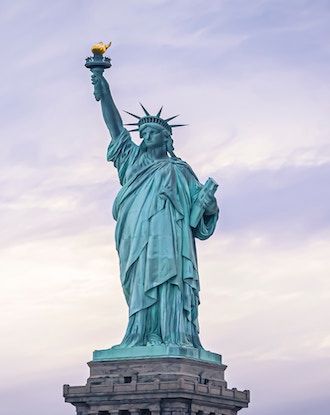
Statue of Liberty
The Statue of Liberty’s history goes back several years before it was officially dedicated by President Grover Cleveland on October 28, 1886. Inklings of the idea for the statue can be found as far back as 1865. The American Civil War was drawing to a close and French historian Edouard de Laboulaye first floated the notion that France should create a statue to celebrate America’s success in building its democracy. While designs were fussed over for years, the actual work on the statue didn’t begin until 1875. The statue was designed by sculptor Frederic Auguste Bartholdi, who is rumored to have designed the statue’s face off the face of his mother. While most of the work on the statue was being done in France, intense fundraising efforts were underway in the United States. American architect Richard Morris Hunt designed the statue’s pedestal and the location on Bedloe’s Island was chosen. Once the statue was completed in 1885, it had to be disassembled, packed in more than 200 crates, and shipped from France to New York. Once it arrived, it took four months for workers to reconstruct and mount the 305-foot tall statue on its pedestal.