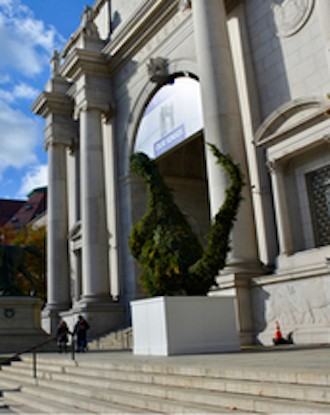
The American Museum of Natural History was founded in 1869 by a man named Albert Smith Bickmore. Bickmore’s proposal to create a natural history museum in the city gained the support of notable historical figures such as Theodore Roosevelt Sr., Willam E. Dodge Jr., and J. Pierpont Morgan. The New York Mayor at the time, John Thompson Hoffman officially signed the Acts of Incorporation to create the museum on April 6th and John David Wolfe was named the first President of the museum later that year. The museum’s curators work hard to create displays that “serve as a field guide to the entire planet.” And another initiative of the natural history museum is to display a wide collection showcasing the world’s many distinct cultures. In 2007, the Hall of Human Origins was officially opened. This exhibit displays incredible evidence of human evolution through the millennia, as well as some conjecture into the future of the human species. In 2009, the entire museum underwent a major renovation and restoration project on the “castle-like” facade that faces 77th Street. Overall, the American Museum of Natural History is the largest natural history museum in the world and attracts more than five million visitors every year.
City Page Type: Destination
-
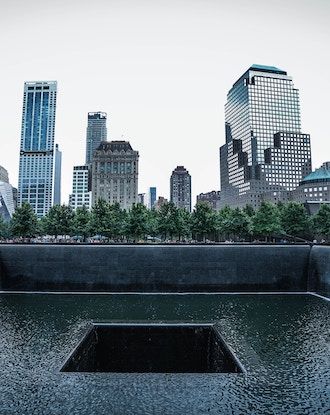
9/11 Memorial and Museum
The 9/11 Memorial and Museum was officially completed and opened on May 21, 2014. Since it opened, the memorial and museum have attracted visitors from all 50 states and more than 175 countries worldwide. Parts of the museum actually include the vast cavity that once housed the World Trade Center complex. The museum shares personal stories from the day of the attacks, stories from the aftermath, and first-hand accounts from people who experienced the events and lived to tell their tales. The museum’s collection includes a number of authentic artifacts remaining from the two massive skyscrapers that used to stand on the site. It includes more than 11,000 square feet of exhibitions, including some detailing acts of K-9 courage on that fateful day and how the site experienced a rebirth as the city continued to grieve its losses. The museum’s Audio Guide is a great way to experience a self-guided tour through the exhibitions. In addition, the museum and memorial offer a number of daily guided tours ranging from 45 to 90 minutes in length. Large groups of 20 or more can book private tours with dedicated entry access through the museum’s southeast corner.
-
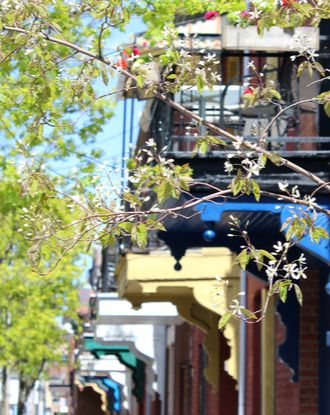
UQAM
Established in 1969 by the Government of Québec, the Université du Québec à Montréal is the result of a merger between the fine arts school École des Beaux-Arts de Montréal, the Collège Sainte-Marie, and several other smaller schools. With over 40,000 students spread across six facilities in the downtown area of Montreal, it’s a popular institution for French-speaking students as its Anglophone population makes up only 1% of its attendees. It is a major hub of French academia and culture, with numerous faculties and research institutes to its name, and has a reputation for distinguished awards in law and geopolitical competitions. Numerous alumni have gone on to become accomplished novelists, filmmakers, ministers of Quebec’s government, activists, economists, and pioneers of their respective fields.
-
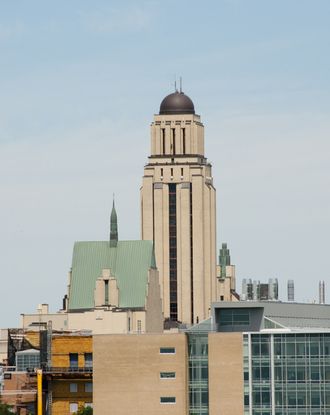
Université de Montréal
Established in 1878, the Université de Montréal is one of Montreal’s two French-language universities. Located on northern slope of Mount Royal and nestled between the city’s Outremont and Côte-des-Neiges boroughs, UdeM is home to over 60,000 students in undergraduate, graduate and doctoral programs. The institution has been regularly held in high regard on the international stage for its research and the work of its two affiliated schools, the Polytechnique Montréal or School of Engineering, and the business school HEC Montréal. UdeM is often recognized for the distinct Art Deco style combined with an International style its buildings represent, all designed by the architect Ernest Cormier. Most of all, its students have enjoyed its long involved history in research and performative arts, in addition to its developing work in quantum sciences and artificial intelligence.
-
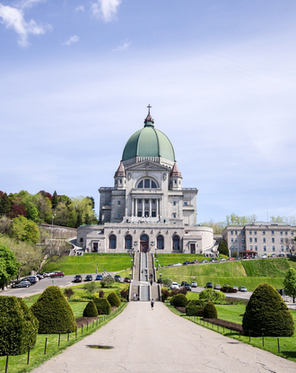
St. Joseph’s Oratory
St. Joseph’s Oratory (L’Oratoire St-Joseph) is a national shrine and Roman Catholic Basilica on the Westmount summit of Mount Royal. Construction of the shrine was a monumental undertaking, beginning in 1924 and only finishing in 1967. Multiple architects and artisans contributed to the project throughout its construction, including Dom Paul Bellot, responsible for designing the oratory’s famous dome (one of the largest church domes in the world) in 1937. St Joseph’s Oratory is a National Historic Site of Canada and is Canada’s largest church. The Montreal oratory towers above the city at 263 meters above sea level, actually making it the only building in the city to violate Montreal’s municipal building code, which limits the height of buildings to 232.5 meters above sea level so that they do not raise higher than the summit of Mount Royal. The shrine is also renowned for its association with brother André Bessette, who was canonized in 2010, making him the first Canadian saint since Confederation in 1867.
-
St. Hubert Airport
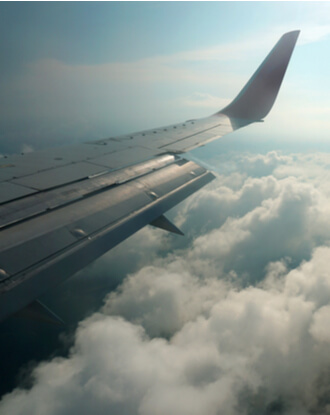
Built in 1928, the Montréal Saint-Hubert Longueuil Airport was actually Montreal’s first airport before the construction of the Dorval Airport (now the Montréal-Pierre Elliott Trudeau International Airport) in 1941. Despite being only a 20-minute drive from downtown Montreal, the airport has mainly operated as a hub for private flights in recent years, primarily ferrying firefighters, sports teams, and corporate groups on chartered planes. Recently though, the airport has radically expanded its capabilities to receive commercial airliners. This expansion has paved the way for passenger airlines to begin offering flights to and from the airport and is particularly appealing to low-cost carriers (one of which has already announced plans to offer direct flights to a range of Canadian destinations, as well as Florida and New York.)
-
Place Bell
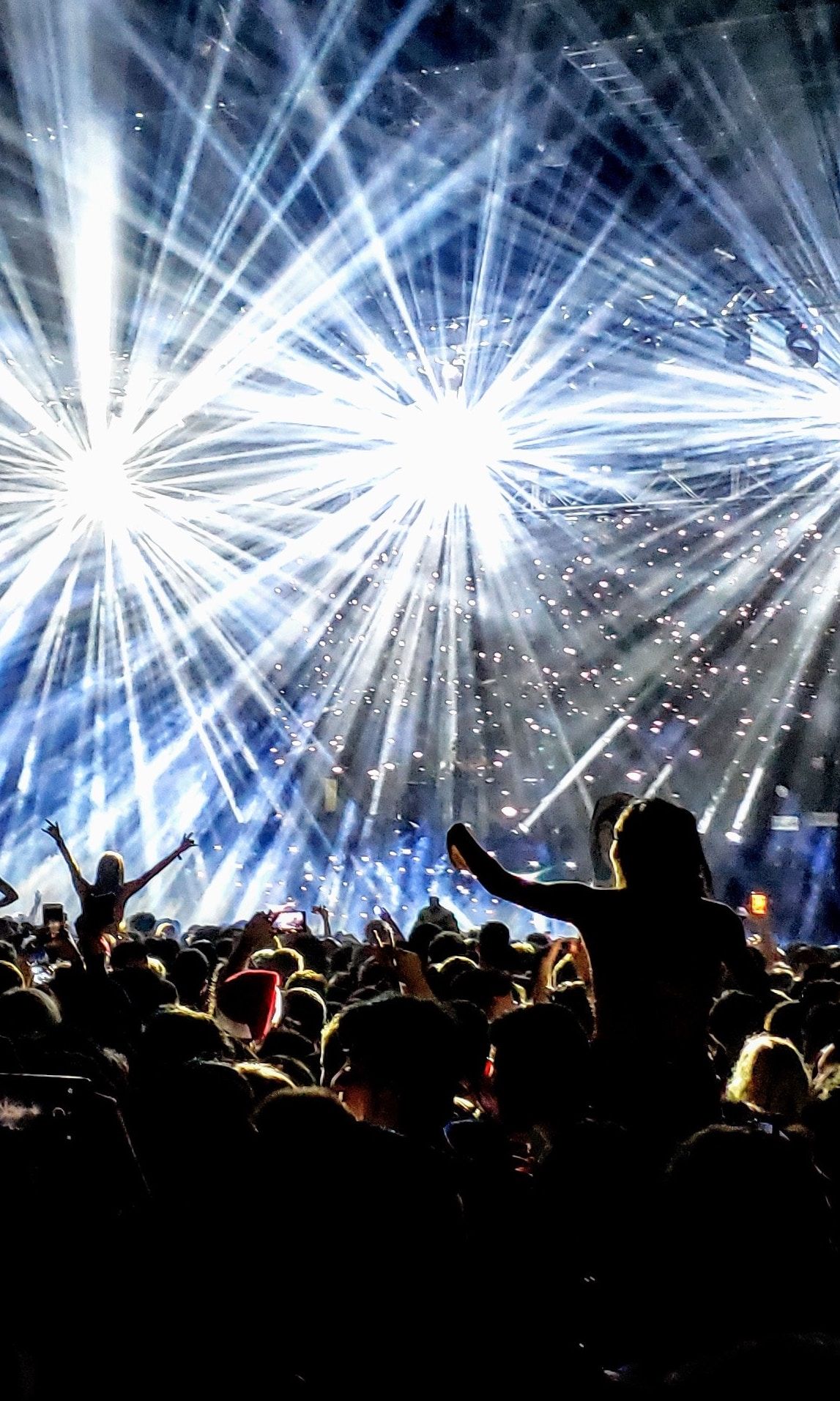
Once of the freshest attractions for big events in Montreal, Place Bell opened in September of 2017. It’s the site of a 10,000-seat arena which can be converted into a performance venue and is equipped with an NHL-standard skating rink, an Olympic-sized skating rink with 2,500 seats and a separate community skating rink that can host up to 500 spectators. All of these features means that it has been the site of a wide variety of cultural and sporting events, and is a huge gathering place for residents of the city of Laval and the North Shore of the Island of Montreal. A relatively brand new complex for the area surrounding Montreal, Place Bell features a fresh design and artworks by the likes of Michel Goulet and Louis Viger in the form of installations that are prominently displayed upon entry.
-
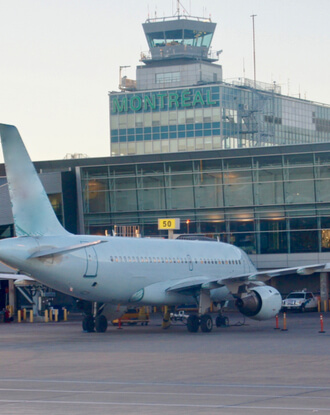
Pierre Elliott Trudeau International Airport
Located on the western side of the Island of Montreal, Pierre Elliott Trudeau is the third-busiest airport in Canada with a total of 18.16 million passengers and over 200,000 aircraft movements in a single year. Thankfully, it’s far from a confusing place with major terminal renovations and expansions in recent years for both national and international arrivals and departures. Even now, there are plans to expand the services and reach of the airport that lead up to the year 2030. Apart from its modernization in the past decade, there’s a lot for passengers to enjoy during their waits and layovers: Art installations which feature the work to be found in Montreal’s museums, shops, a children’s playground area, and—true to form for a culinary city like Montreal—restaurants upon restaurants in a space called the Haltes gourmands (“gourmet stops”).
-
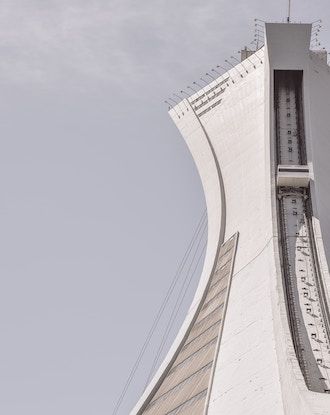
Olympic Stadium
First opened in 1976, Montreal’s Olympic Stadium is Quebec’s largest covered amphitheatre with enough seats for 56,000 spectators. It was originally constructed when the International Olympic Committee selected Montreal for the 1976 Summer Olympic Games, but has since become an occasional host to the city’s football and soccer teams’ matches. Most locals remember the building as being home to Montreal’s Major League baseball team, the Expos, but hasn’t been the central home to the team since 2004. The building’s iconic look comes from the French architect Roger Taillibert, whose work resembles that of the Australian Pavilion at Expo ’70 in Osaka, Japan. The Olympic Stadium has a retractable roof, opened and closed by cables suspended from a huge 175-metre (574 feet) high tower (the tallest inclined structure in the world).
-
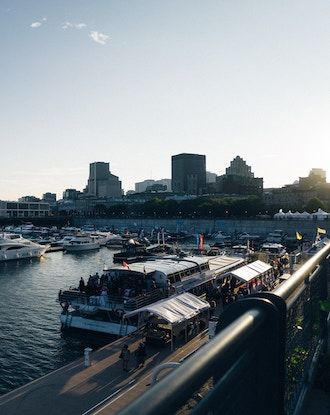
Old Port
The historic port of Old Montreal is the most storied part of the city of Montreal, with its use stretching back to the year 1611 when it was populated by French fur traders using it as a trading post. Since then, the area has been redeveloped into the cobblestoned area it’s known to be today, with tourist visits numbering in at six million annually. Many flock to the area for its grandeur, walking its streets for sightseeing activities. Montreal is commonly known as a city that is trapped in time between its origins and the current day, and a place which mixes and mingles North American and European designs; to get a sense of this, Old Port is the place to visit.